
Awase dashi is the most common type of dashi used in Japanese cuisine. It is made with a combination of katsuobushi (dried bonito) and konbu (kelp), and is packed full of natural umami flavor. Follow the step-by-step recipe to make this versatile broth.
Jump to:
What is awase dashi?
The word ‘awase’ means combining in Japanese. When two types of ingredients are used together, the flavor becomes more intense and complex.
The most popular ingredients for awase dashi - katsuobushi and konbu are rich in inosinic acid and glutamic acid, creating a robust umami rich flavor.

What does awase dashi taste like?
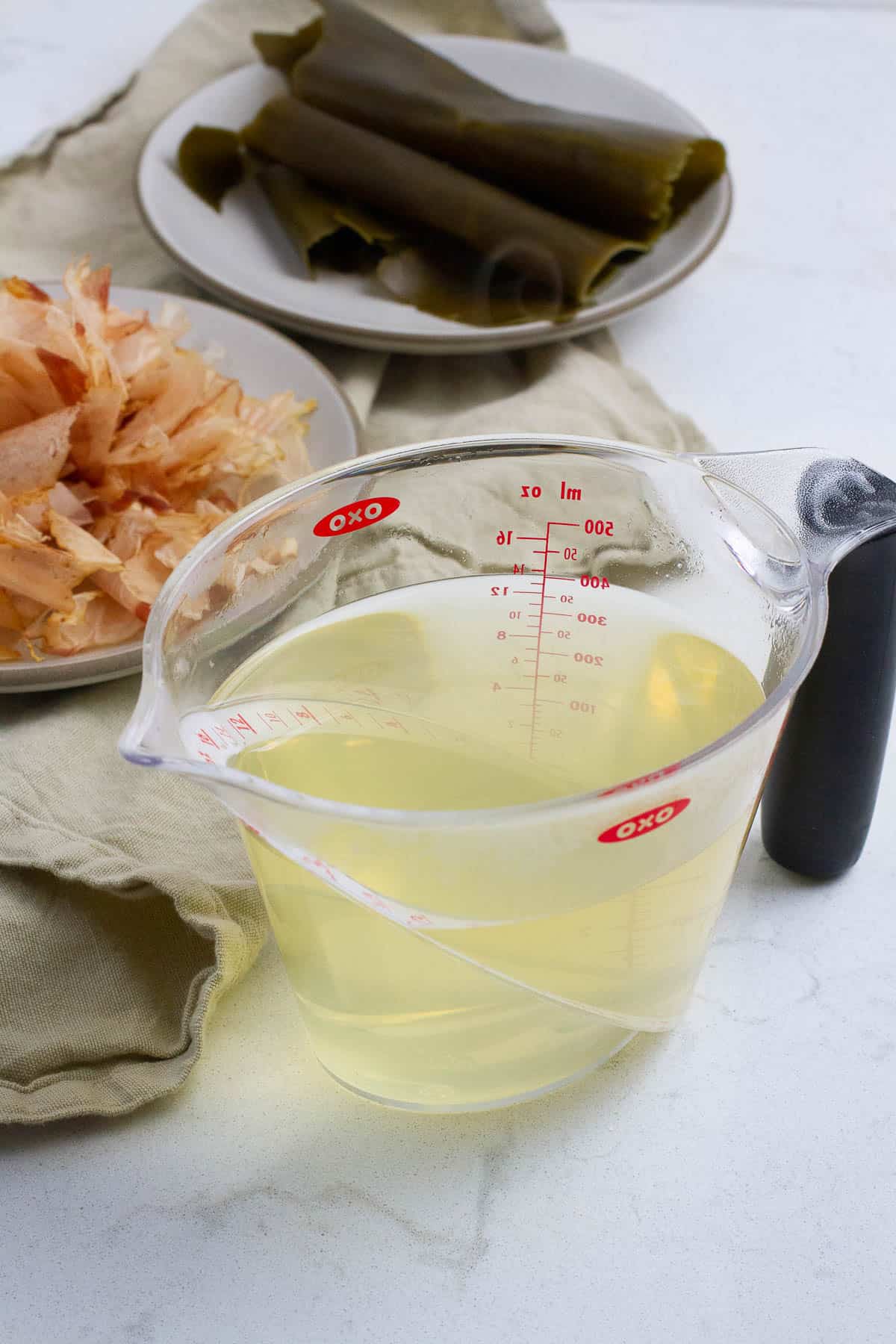
Awase dashi on its own has a savory, smokey, subtly sweet flavor. Since sodium (salt, soy sauce, miso etc) is not added at this point, it does not taste like a ready to serve soup yet. It comes in very light brown, or amber color.
Is awase dashi gluten-free?
This homemade awase dashi recipe is gluten-free!
Making your own dashi is such a great idea when you have gluten sensitivity. Although various kinds of instant dashi granules are available nowadays, many brands happen to contain gluten. Also, even if you do not see wheat on the list, it is often not specified whether the ingredient ‘yeast extract’ is wheat derived or not.
Ingredients for this recipe
How to make awase dashi
Step 1. Soak konbu. Fill a saucepan with 4 cups of water. Leave the konbu in the water for 20 minutes.
Step 2. Simmer konbu. Turn the heat to medium, and bring to almost boiling, taking about 10 minutes. Do not let it boil. Then take the konbu out of the water (leaving konbu dashi in the pan).


Step 3. Simmer katsuobushi. Add katsuobishi to the konbu dashi. Let simmer on low heat for 5 minutes.
Step 4. Strain. Pour the dashi through a sieve and transfer to another bowl. Squeeze all the liquid out of bonito to get maximum flavor.


Tips
- Make sure to weigh konbu and bonito flakes with a kitchen scale. It is easier to measure in grams rather than in ounces.
- Do not boil konbu as it starts to release bitterness into dashi. If the water gets too hot, turn down to low heat to keep simmering for at least 10 minutes.
How should I store awase dashi?
To refrigerate:
Dashi broth can be refrigerated for up to 5 days, covered tightly. Make sure to cool down before transferring to the fridge.
To Freeze:
Awase dashi can be frozen for up to 1 month. I highly recommend freezing dashi in smaller batches in ice cube trays or silicone muffin pans rather than in one large block. That way, it’ll be easier to portion control as you need.
Make sure not to store with strong smelling foods. If you are freezing in ice cube trays, transfer frozen cubes to an airtight freezer bag as soon as possible.
What should I do with used konbu and bonito?
Konbu and katsuobushi that have been used once still have so much flavor!
Before reusing, they can be kept refrigerated for up to 3 days, or frozen for up to 1 month. For konbu, cut into small pieces before freezing so it is easier to use in small batches later.
And here are a few good ways to reuse dashi ingredients.
1. Make niban dashi - (second dashi)
Flavor will be less intense, but you can make another batch of dashi again. It is perfect for miso soups, nimono (stews), and broth for noodles.
- In a saucepan, place 3 cups of water and simmer previously used konbu and katsuobushi for 10 minutes (do not boil).
- Add 5g of fresh katsuobushi, and let simmer for 2 more minutes.
- Pour through a fine sieve. Make sure to squeeze all the liquid out of the ingredients.
- Storage: 3 days in the fridge, 1 month in the freezer.
2. Chop up and add to fried rice or stir fries.
Adds a boost of umami flavour as well as extra fiber from konbu.
3. Make homemade furikake
- Chop the used konbu and bonito finley.
- Place them in a small pan and season with 1 tablespoon tamari soy sauce, 2 tablespoons mirin, and a pinch of salt.
- Cook until the moisture evaporates completely.
- Mix in 1 teaspoon white sesame seeds at the end. Enjoy with a warm bowl of rice! Consume within a week.

Which katsuobishi should I use?
Any katsuobushi that is shaved rough is more reasonable and suitable for dashi making. In the states, I recommend looking for a type called ‘Hanakatsuo’ that is sold in a larger bag. Finer bonito flakes are used more for toppings and garnishing.
You may also like...
- Easy Oyakodon (Japanese Chicken and Egg Bowl)
- Gluten-free Okonomiyaki (Japanese Savory Pancakes)
- Butadon (Japanese pork rice bowl)
Recipe

Awase dashi (Japanese soup broth)
Ingredients
- 4 cups water
- 0.28 ounces dried konbu (kelp)
- 0.35 ounces bonito flakes
Instructions
- Fill a saucepan with 4 cups of water. Leave the konbu in the water for 20 minutes.
- Turn the heat to medium, and bring to almost boiling, taking about 10 minutes. Do not let it boil. Then take the konbu out of the water.
- Add dried bonito to the konbu dashi. Let simmer on low heat for 5 minutes.
- Pour the dashi through a sieve and transfer to another bowl. Squeeze all the liquid out of bonito to get maximum flavor.
Notes
Nutrition
The nutritional information on this website is only an estimate and is provided for convenience and as a courtesy only. The accuracy of the nutritional information for any recipe on this site is not guaranteed.


Leave a Reply